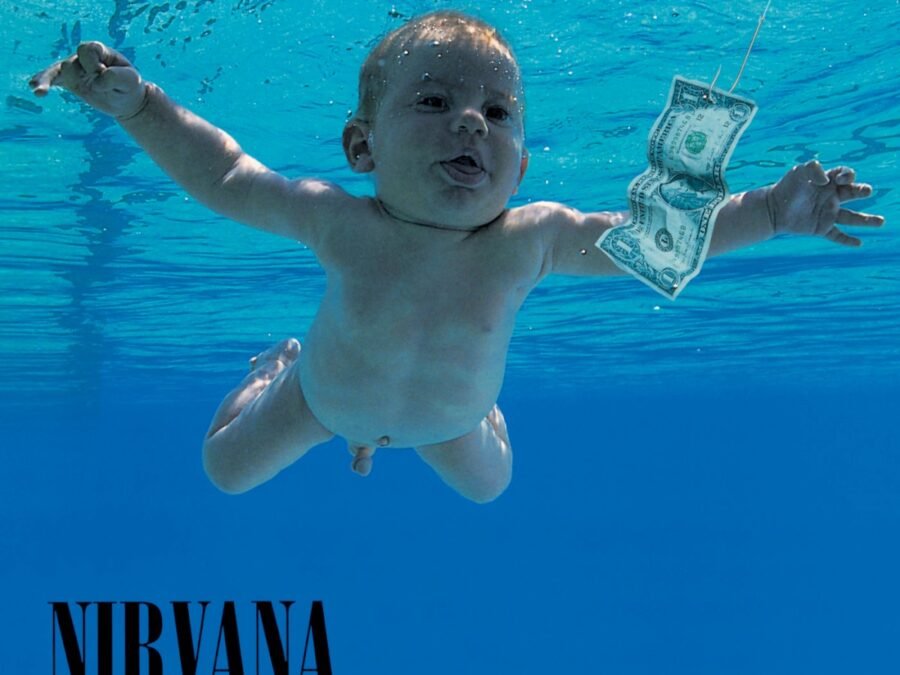
By September 1991, the American rock underground had spent a decade building an entire ecosystem, college radio, zines, van tours, indie labels, in willful opposition to the mainstream. [[Nirvana]] blew that wall down from the inside, and they did it with an album that, put simply, is a pop record wearing a leather jacket it stole off someone else.
Kurt Cobain arrived at Sound City Studios in Van Nuys with a boombox cassette so degraded that
it was really terrible sounding and you could barely make out anything
, but Butch Vig heard the bones of "Smells Like Teen Spirit" through the hiss and knew what he had. What followed was a five-week session, budgeted at roughly $65,000 (a small fortune next to the couple hundred dollars spent on *Bleach*), that took a trio still nervous about signing to a major and gave them, whether they wanted it or not, the cleanest, most extroverted production of their career. Vig and mixer Andy Wallace built a record where the guitars detonate instead of just distorting, where Dave Grohl's drums land like they've been slapped rather than played, and where Cobain's voice, that ragged, elastic instrument, sits high enough in the mix to actually be understood. Cobain himself was never entirely comfortable with the gloss; he'd later grouse that the song sounded closer to a Mötley Crüe record than the punk record it was supposed to be. He wasn't wrong, and that tension is the whole story of this album.
Because here is the thing nobody wants to fully reckon with: *Nevermind* isn't a punk record, and it isn't really grunge in the way that word got flattened by MTV into craggy guitars and stadium drums. Strip away the flannel mythology and what's underneath is a quiet-loud-quiet formula lifted wholesale from the Pixies, filtered through the melodic instincts of the Beatles and a healthy dose of Cheap Trick's arena-pop shine. Cobain wasn't hiding this. He said as much himself. The album's true lineage runs through the Wipers, the Replacements, Hüsker Dü, Sonic Youth, eighties college rock that most of the record-buying public in 1991 had never heard of, which is exactly why the "shock of the new" people felt on first listen was really just recognition arriving without credit. That's not a knock on the songwriting. If anything it clarifies what Cobain actually was: not a genre pioneer but an extraordinarily gifted synthesist with an ear for a hook so sturdy it could survive being buried under distortion, played a thousand times on the radio, and covered by every bar band in America without losing its shape.
The first side is close to airtight. "Smells Like Teen Spirit" runs on a sixteenth-note power-chord strum married to a vocal melody so catchy it disguises itself as a hardcore anthem for kids who'd never touch hardcore. "In Bloom" is a nastier trick, a singalong chorus built specifically to expose the people singing along without listening. "Come As You Are" repurposes a Killing Joke bassline into something warmer and more haunted, its lyric ("as you were, as I want you to be") a small knot of contradictory tenses that reads less like slogan and less like nonsense the longer you sit with it. "Lithium" might be the best pure songwriting on the record, jazzy in its internal rhythms, cathartic in its screamed release. "Breed" and "Polly" round the side out, the latter's queasy, matter-of-fact narration of assault doing something genuinely uncomfortable that the album's reputation for "fun" tends to paper over.
Side two is where the record loosens its grip, and I think that's actually honest rather than a flaw to be explained away. You can hear Cobain getting restless with the very formula that was about to make him enormous, straining toward the noisier, more abrasive record he'd eventually make with Steve Albini two years later. "Lounge Act" and "Drain You" are terrific, tightly wound songs that don't get a fraction of the airplay of the singles and arguably deserve more of it. "Territorial Pissings" and "Stay Away" are the sound of the band trying to claw back some ugliness the mix won't quite allow them. And then "Something in the Way" ends the whole thing on a note of genuine, unforced desolation, cello and hushed acoustic guitar standing in stark contrast to everything that came before it, the one moment where the record's undertow of depression stops hiding behind the hooks.
Thirty-five years on, it's tempting to talk about *Nevermind* only in terms of what it did: the platinum certifications, the thirteen times over, the week in January 1992 when it dethroned Michael Jackson's *Dangerous* at number one on the Billboard 200, the domino effect that got Soundgarden and Pearl Jam and a decade of diminishing imitators onto MTV. That story is real and it matters, but it also obscures the more interesting fact, which is that the record is genuinely a little uneven, occasionally overproduced by its own maker's admission, and still remarkable almost despite itself. The best songs here don't sound like a movement. They sound like a songwriter who happened to be miserable enough, melodic enough, and unlucky enough in his timing to accidentally end an era. That he hated what the record turned him into doesn't diminish it. If anything it's the most honest thing about the whole package: a mainstream smash built by someone actively allergic to the mainstream, which is as close to a definition of 1991 as you're going to get.
Artist: Nirvana
Album: Nevermind
Year: 1991
[Listen on Spotify](https://open.spotify.com/album/4MRXGUCB89CliYc7YWICI0)
[Listen on Qobuz](https://www.qobuz.com/us-en/search?q=Nirvana+Nevermind)